DA Toolkit

Instruments

Dynamic-assessment instruments developed by Prof. Tzuriel, used worldwide to reveal cognitive modifiability and hidden learning potential in children.

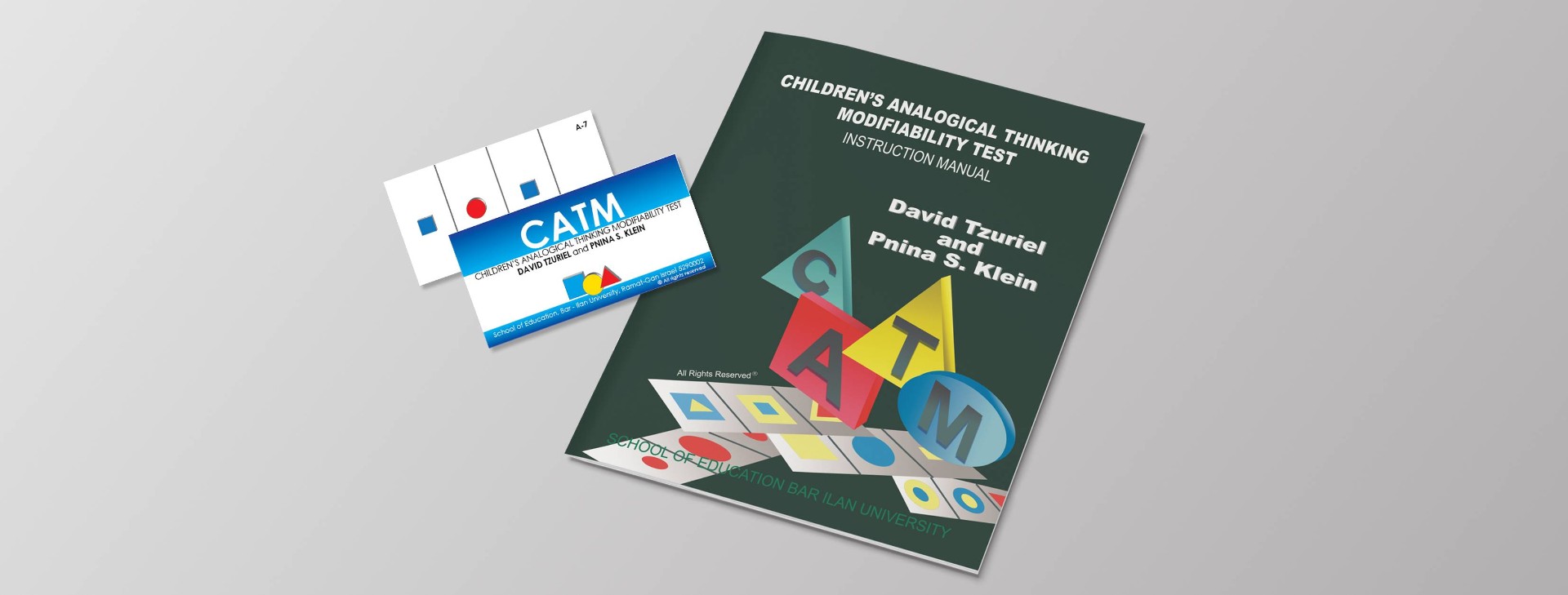
Children's Analogical Thinking Modifiability (CATM)

Children's Analogical Thinking Modifiability (CATM)

Ages 4–7

The CATM is aimed at assessing learning potential, cognitive functions, and required mediated learning strategies in young children, using the operation of analogy. It is composed of 18 colored blocks (red, blue, yellow) and three sets of analogical problems for Pre-Teaching, Teaching, and Post-Teaching phases.

  • Cognitive functions: impulsivity, considering several sources of information, verbal tools, systematic exploratory behavior
  • Cognitive operations: classification and logical reasoning
  • Used to evaluate cognitive education programs; validity established clinically and empirically
CATM — Closed Analogies Version (CATM-CL)

CATM — Closed Analogies Version (CATM-CL)

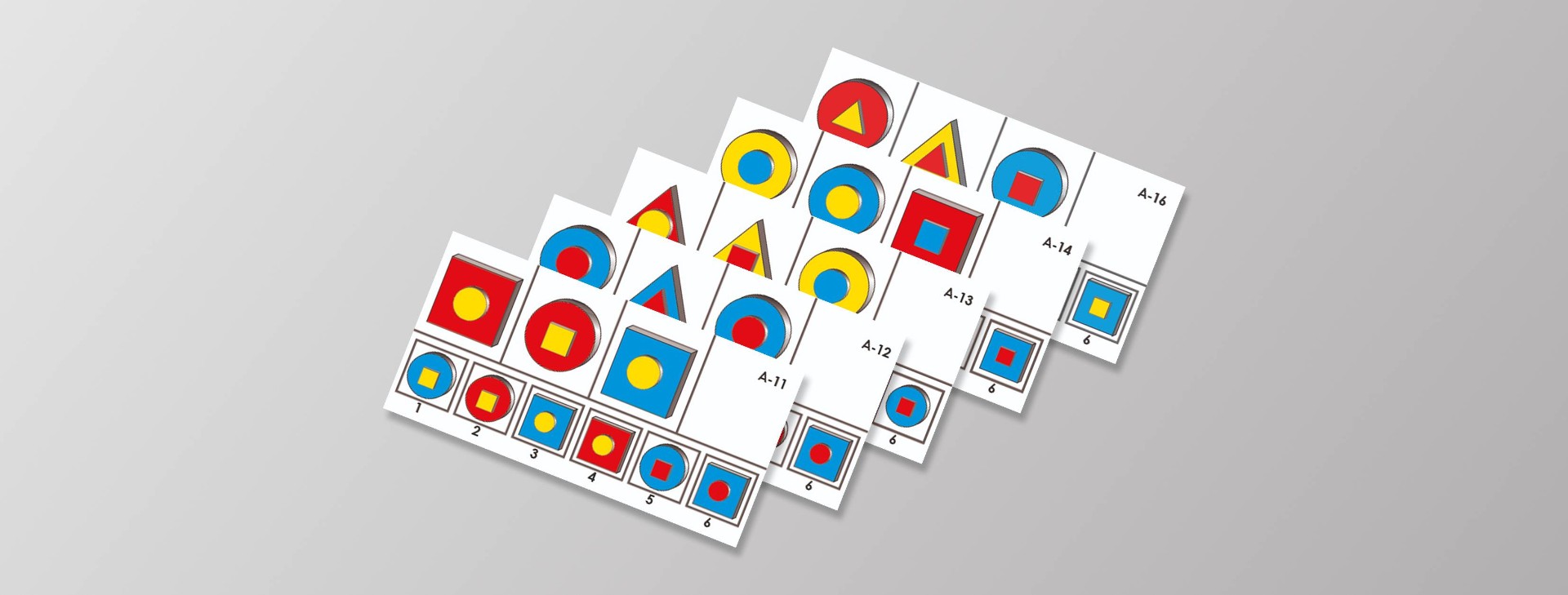
A variant of the CATM that presents problems in a three-dimensional mode on a card with six possible solutions (one correct, five distractors). The child must sort out interfering distractors while holding the correct answer in working memory.

Children's Inferential Thinking Modifiability (CITM)

Children's Inferential Thinking Modifiability (CITM)

Ages 4–7

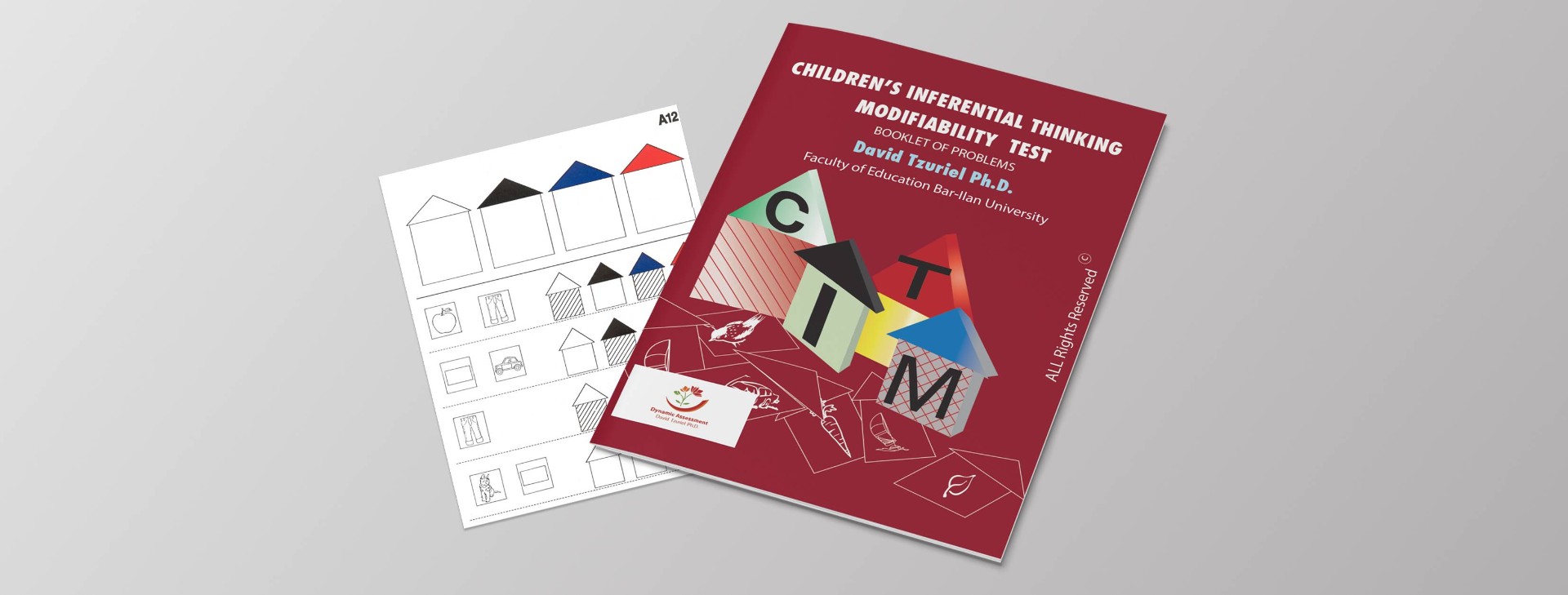
Assesses learning potential, cognitive functions, inferential thinking, and mediated learning strategies. Four sets of problems for Pre-Teaching, Teaching, Post-Teaching, and Transfer phases — figural 'sentences' describing possible object locations in houses with different-colored roofs.

Cognitive Modifiability Battery (CMB): Assessment and Intervention

Cognitive Modifiability Battery (CMB): Assessment and Intervention

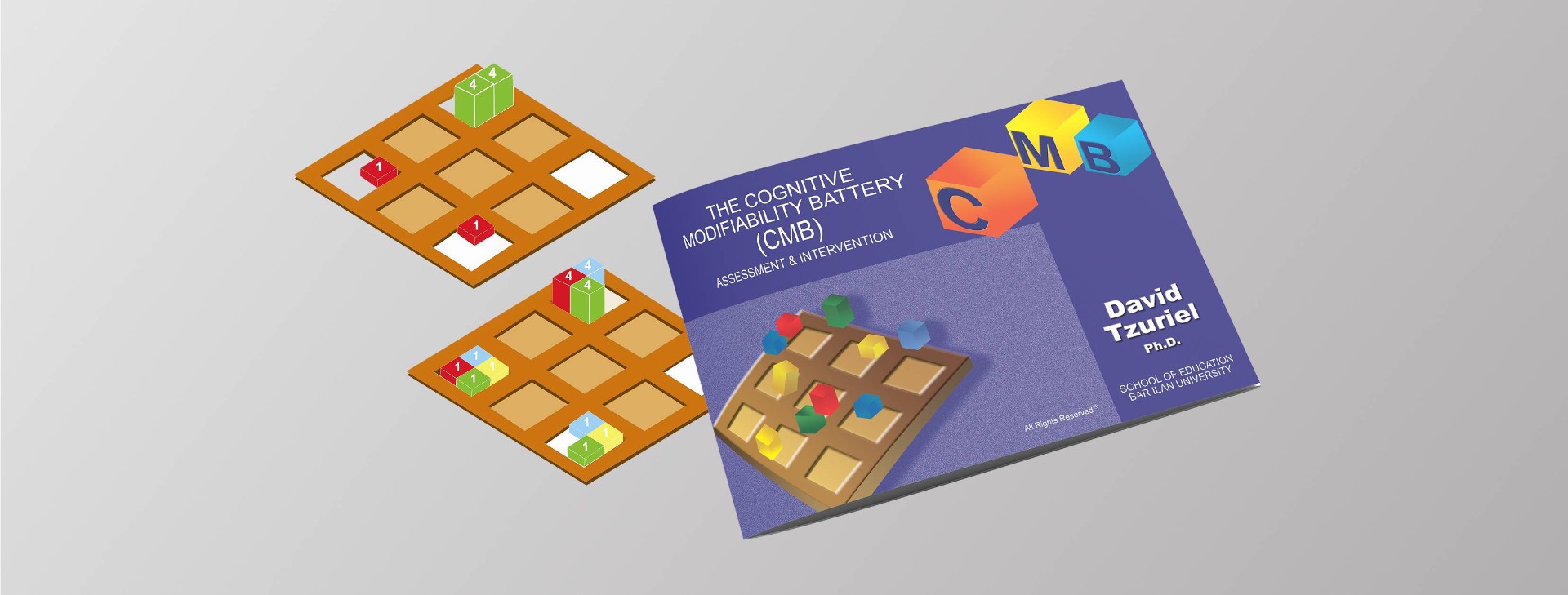
A comprehensive test of 8 subtests: Seriation, Reproduction of Patterns, Analogies, Sequences (Levels I & II), Memory, Mental Rotation, and Spatial Working Memory. Constructed of 4 plates, 64 colored blocks, 36 wooden squares, and a 'Windows' design board.

The Seria-Think Instrument — Revised

The Seria-Think Instrument — Revised

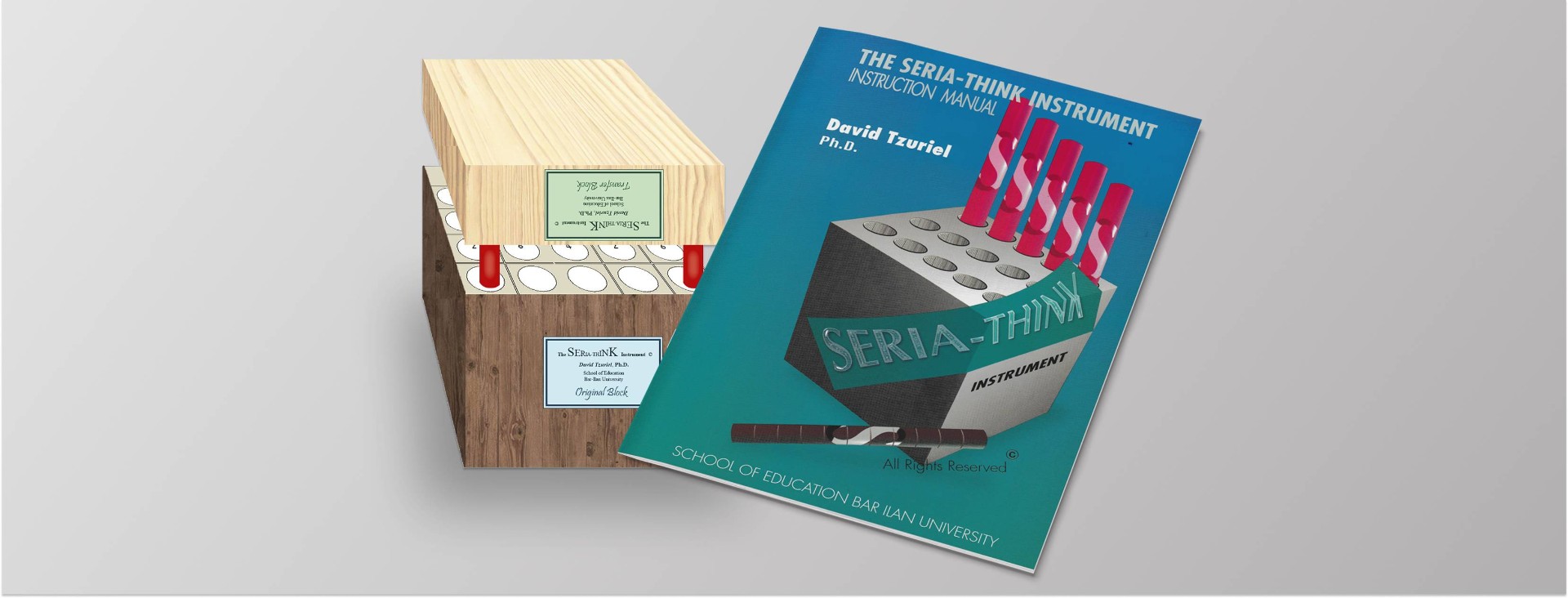
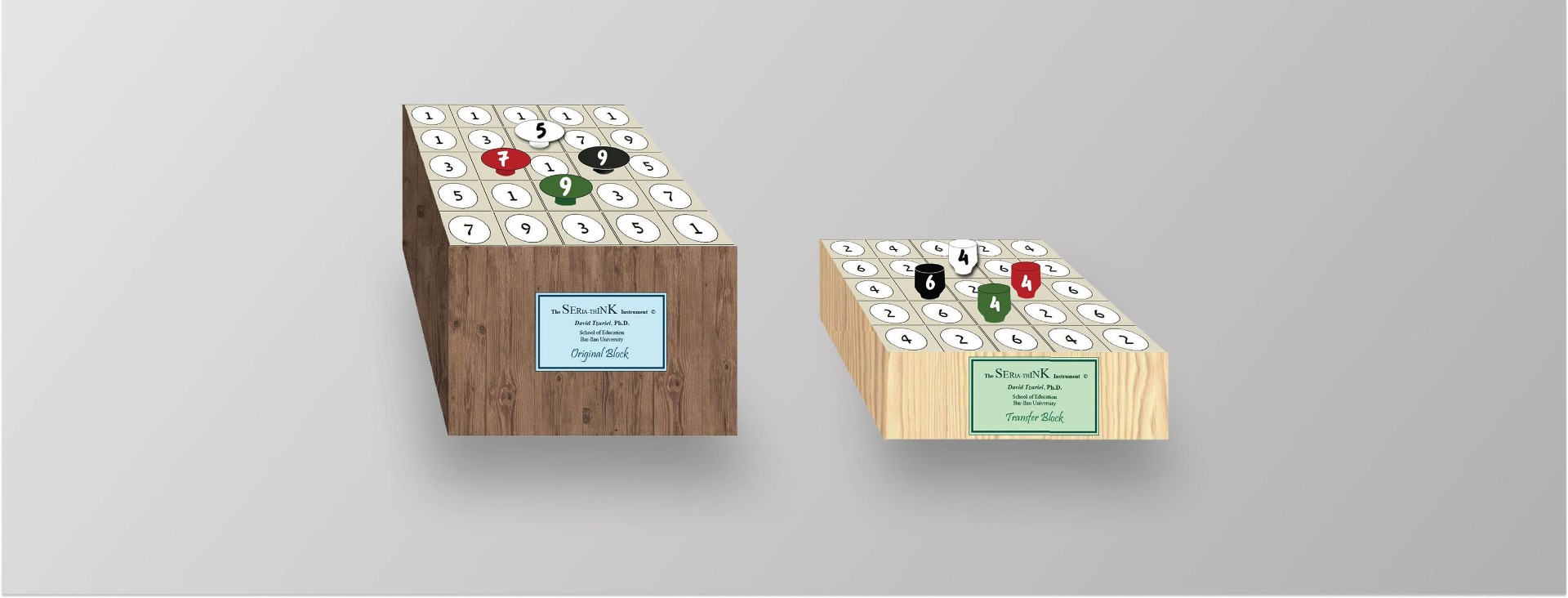
A novel DA instrument aimed at assessing and teaching children planning and self-regulation behavior, plus a variety of arithmetic skills based on the operations of seriation and math. Includes an Easy Version, a Transfer Test, and a Mental Rotation Test.

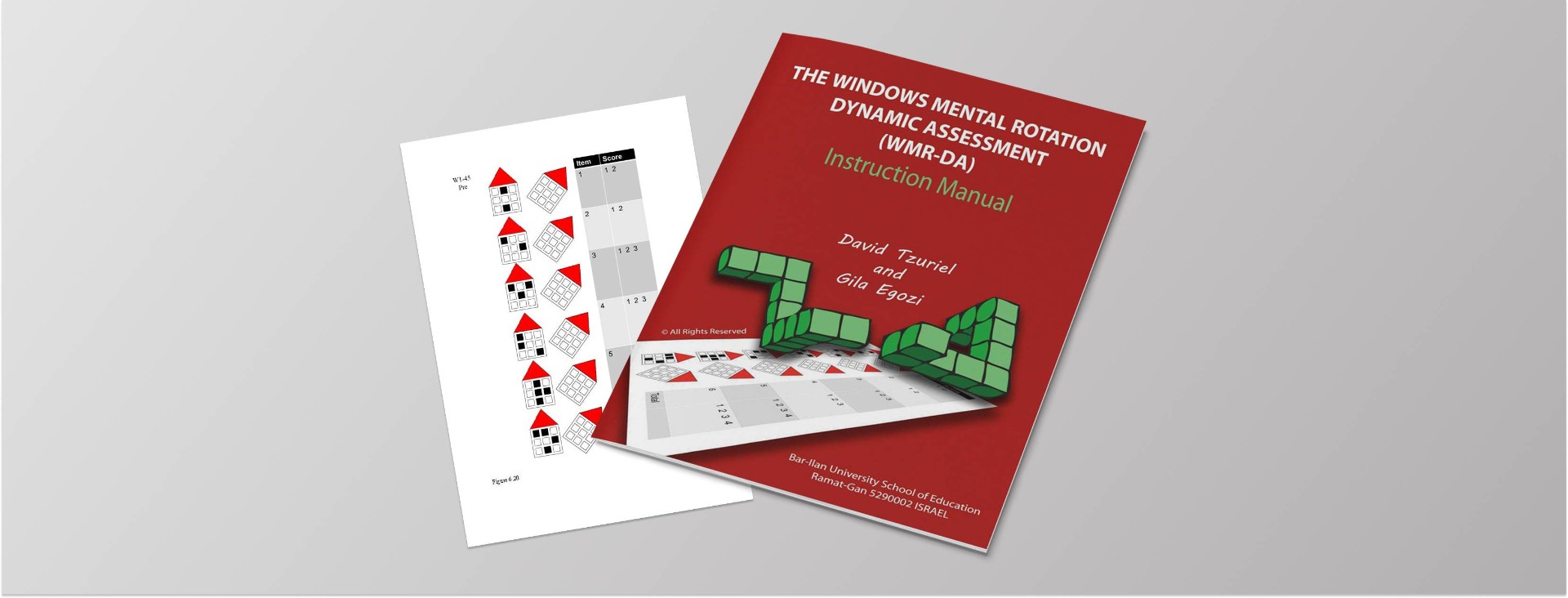
The Windows Mental-Rotation Dynamic Assessment (WMR-DA)

The Windows Mental-Rotation Dynamic Assessment (WMR-DA)

Spatial ability has a vital role in our daily interaction with environment, such as navigation, recognizing and manipulating objects, mechanic performance, academic tasks, and recalling locations. The WMR-DA is designed for students in grades 1 to 6 and to older children who demonstrate learning difficulties especially in visuo-spatial areas.

The Seria-Think 7 × 7 Version (STI-7×7)

The Seria-Think 7 × 7 Version (STI-7×7)

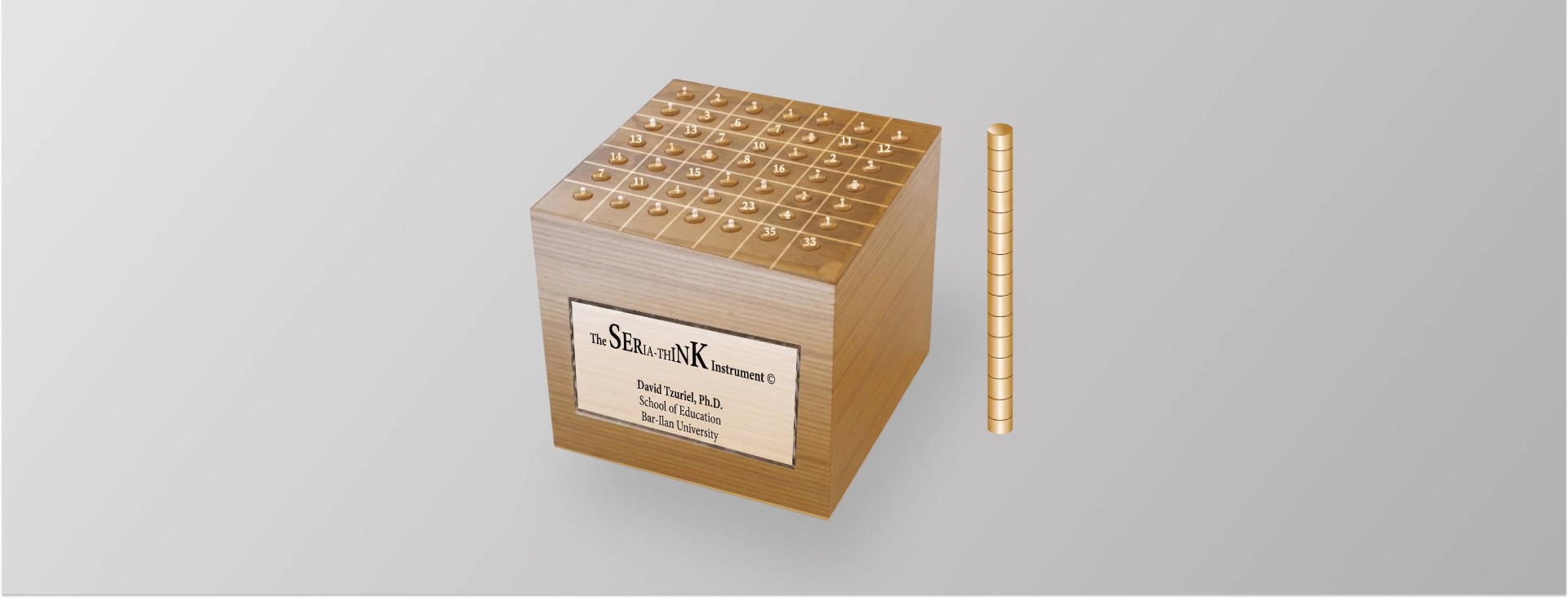
Specifically designed to help teachers — particularly of children with ADHD and learning disabilities — enhance self-regulation and planning behavior. Three difficulty levels with Pre-teaching, Teaching, and Post-teaching phases.

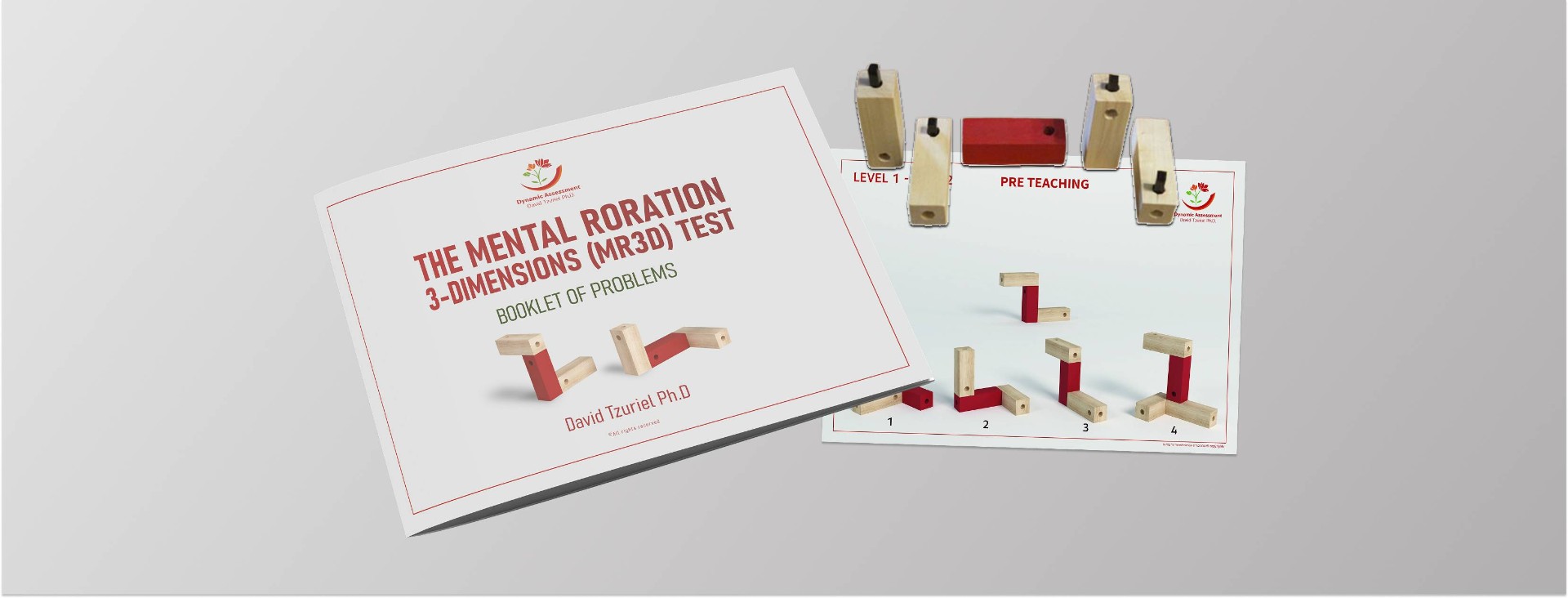
The Mental Rotation 3-Dimensions (MR3D) Test

The Mental Rotation 3-Dimensions (MR3D) Test

Mental rotation (MR) is the ability to imagine how an object seen from one perspective would look if rotated in space into a new orientation. The MR3D combines tangible blocks and a problems booklet.

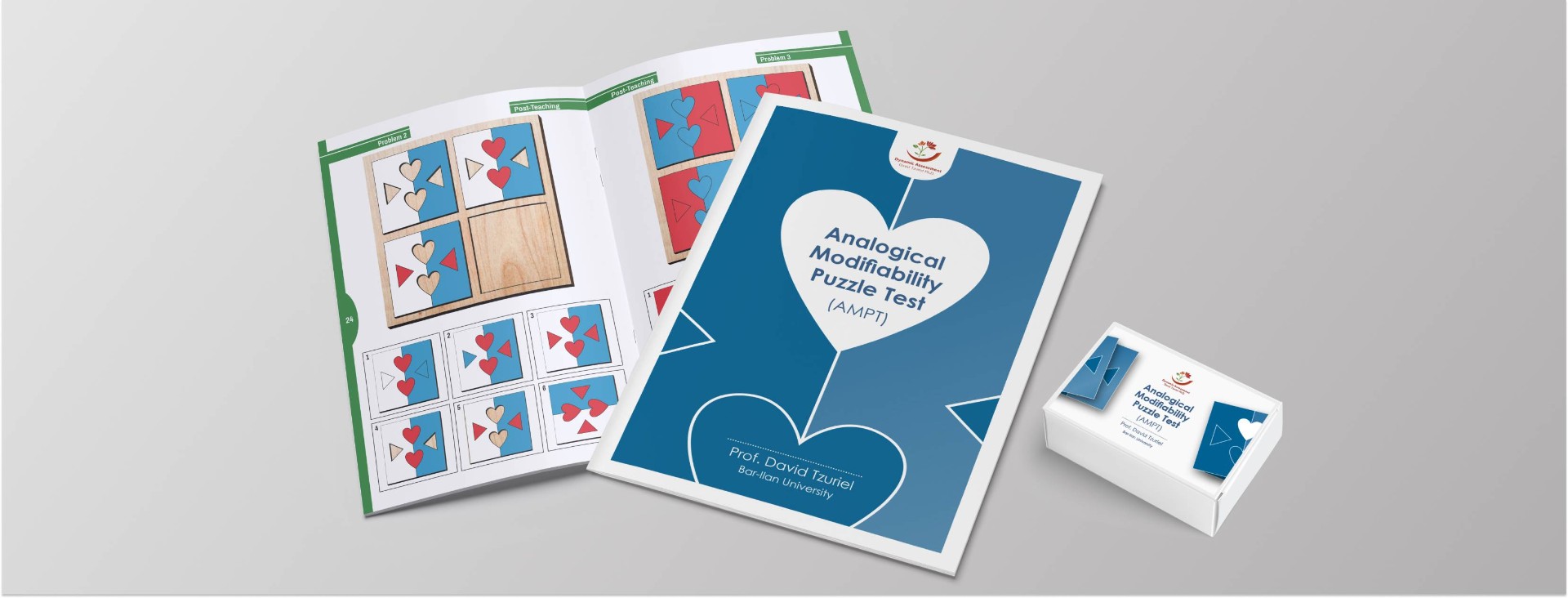
Analogical Modifiability Puzzle Test (AMPT)

Analogical Modifiability Puzzle Test (AMPT)

A DA measure of learning potential and an intervention instrument for developing cognitive operations, problem-solving strategies, and various deficient cognitive functions.

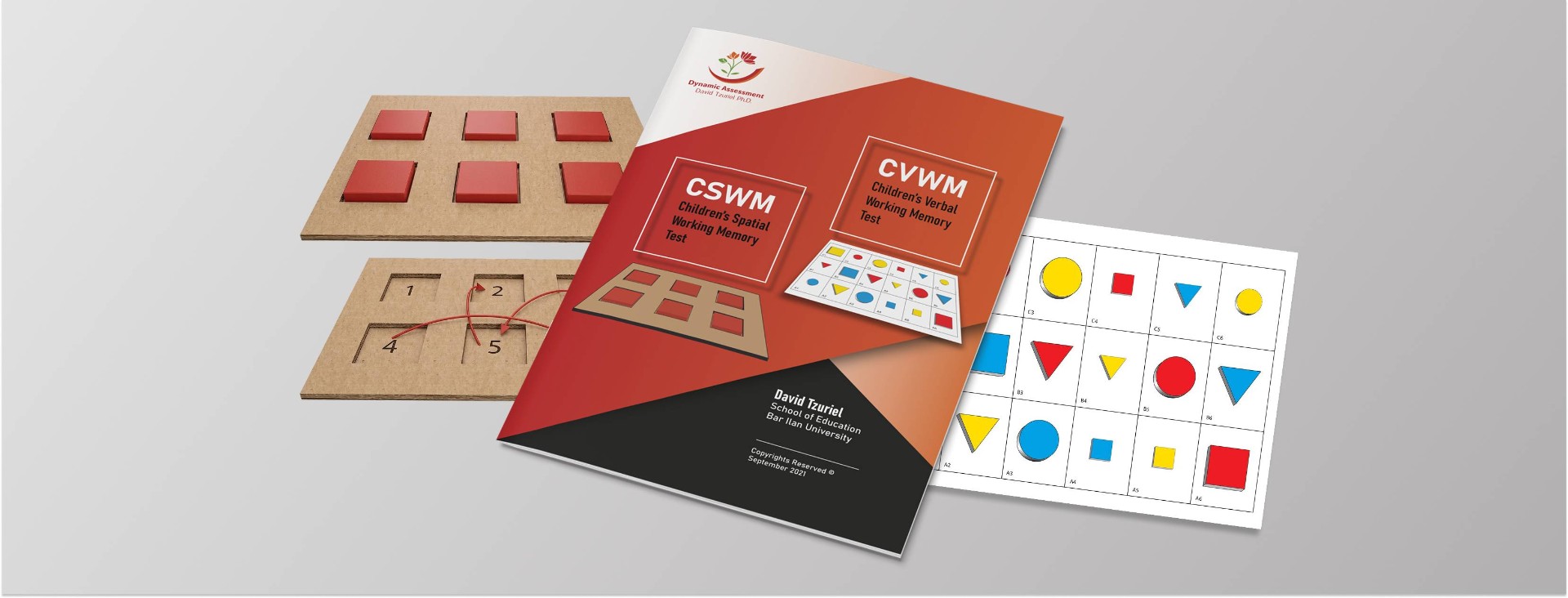
Children's Spatial Working Memory (CSWM)

Children's Spatial Working Memory (CSWM)

A test for assessing spatial working memory in young children. The CSWM evaluates the child's ability to retain and manipulate spatial information across increasingly demanding sequences.

Children's Verbal Working Memory (CVWM)

Children's Verbal Working Memory (CVWM)

A test for assessing verbal working memory in young children. The CVWM asks the child to follow verbal instructions to point to a figure or sequence of figures presented in a matrix of geometric shapes.