Analogical Modifiability Puzzle Test (AMPT)
The AMPT is a dynamic assessment (DA) measure of learning potential and an intervention instrument for developing cognitive operations, problem-solving strategies, and various deficient cognitive functions.
It has been designed primarily for kindergarteners and grades 1–4 students. However, it can also be used with older children in Grades 5 to 8 who have learning difficulties.
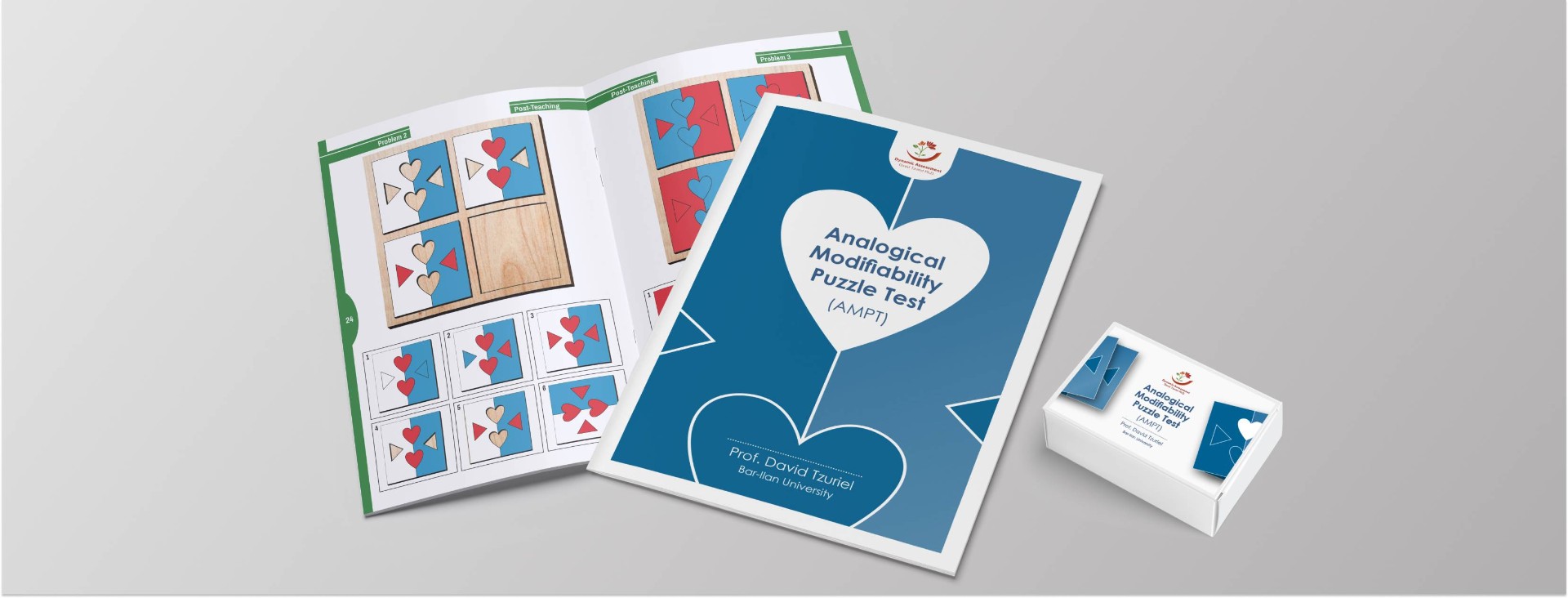
The AMPT can be administered either by the Construction or the Closed analogies version. Each version comprises 12 problems for pre-teaching, teaching, and post-teaching phases. The items in each phase are parallel in terms of the type of problem and difficulty level.
In Construction analogies, the child must construct the solution using tactile colored parts and a plate with four 'windows' in which the puzzle-like design is created.
In the Closed Analogies version, the child must point to the correct solution at the bottom of the page.
The AMPT includes a Transfer subtest developed to assess the extent to which the child internalized the problem-solving principles of analogy.
The AMPT consists of a plate with four cutout squares, colored pieces for the puzzle, squares with templates for the Transfer phase, a booklet with problems, and an instruction manual and recording and scoring sheets.
Goals of the AMPT
- Observe specific cognitive strategies the child uses in solving the problems
- Assess the type and amount of mediation required to modify the child's cognitive functioning
- Evaluate the level of cognitive modifiability following mediation
- Recommend specific teaching strategies for remediation of cognitive performance and 'bridging' to academic and daily life areas
The AMPT was validated in several studies with children in kindergarten to Grade 4. The findings showed higher pre- to post-teaching improvement in Construction than in Closed analogies. Children mediated by the AMPT demonstrated higher pre- to post-intervention improvement in math processing strategies and spatial working memory.